Quick answer: Wine is optional in a pan sauce. Use stock or water to loosen the browned residue, simmer to concentrate the liquid, then finish with a little lemon juice or vinegar and butter. For two servings, the suggested starting formula below uses ½ cup liquid, reduced to about ¼ cup, plus 1 tablespoon butter and ½ teaspoon acid. Adjust to taste rather than treating the ratio as a rule. Stock and water are both suitable deglazing liquids. (guide.michelin.com)
Testing disclosure: The quantities and mushroom variation below are suggested teaching formulas, not recipes verified through kitchen testing. Cooking times and finished yield are approximate.
1. A starting formula for two servings
This makes a small spoon-over sauce, not a large quantity of gravy.
Suggested yield: About ¼–⅓ cup finished sauce
Serving size: Roughly 2–2½ tablespoons per person
Equipment: A 10- to 12-inch skillet, wooden spatula, measuring cup, measuring spoons and a small whisk
Estimated time: 2–3 minutes to measure ingredients; approximately 5–10 minutes for the sauce after the main food is cooked
Ingredients, in order of use
- Browned cooking residue in the skillet
- About 1 teaspoon retained cooking fat, if using shallot
- 1 tablespoon finely minced shallot, optional
- ½ cup unsalted or low-sodium stock, or water, plus extra for adjustments
- ½ teaspoon lemon juice or cider vinegar, plus more to taste
- 1 tablespoon cold unsalted butter, cut into 3 pieces
- Black pepper and salt, as needed
Think of this as 8 tablespoons starting liquid → about 4 tablespoons reduced liquid → 1 tablespoon butter. The butter is added after reduction; the small acid addition is a final adjustment.
The underlying technique—deglaze, reduce and finish with butter—is established culinary practice. The quantities here are a modest starting point, not a universal professional ratio. (resources.escoffier.edu)
2. Check the pan and the browned bits first
The browned residue stuck to the skillet is commonly called fond. Deglazing means adding liquid and scraping to release that residue into a sauce. You want browned cooking juices, not burnt debris. (guide.michelin.com)
Before adding anything, check:
- Color: Golden brown through deep brown is promising. Broad blackened patches are a warning.
- Smell: Toasty or roasted smells are useful cues; acrid smoke suggests burning.
- Fat: A shallow oily sheen is different from a pool of rendered fat.
If the residue is scorched and smells bitter, discard it. Stock, butter and lemon cannot turn burnt fond into a good sauce. (guide.michelin.com)
For a first attempt, choose stainless steel: it allows browned residue to stick and is easy to scrape with a wooden utensil. Cast iron can also work. Nonstick is less useful for learning this particular technique because it discourages the sticking that develops fond. You can still make a stock-and-butter sauce in it, but there may be less browned flavor to collect. (guide.michelin.com)
Remove the cooked food, then spoon excess fat into a heatproof container. If adding shallot, retain only enough fat to cook it gently. Draining excess fat before building the sauce is a standard pan-sauce step. (babi.sh)
3. Deglaze, reduce and finish without boiling the butter
Measure the liquid and cut the butter before starting.
- Lower the heat to medium. If the empty skillet is smoking, move it off the burner briefly.
- Cook the optional shallot. Stir it in the retained fat until softened, approximately 1–2 minutes. If the fond starts darkening quickly, add the liquid immediately.
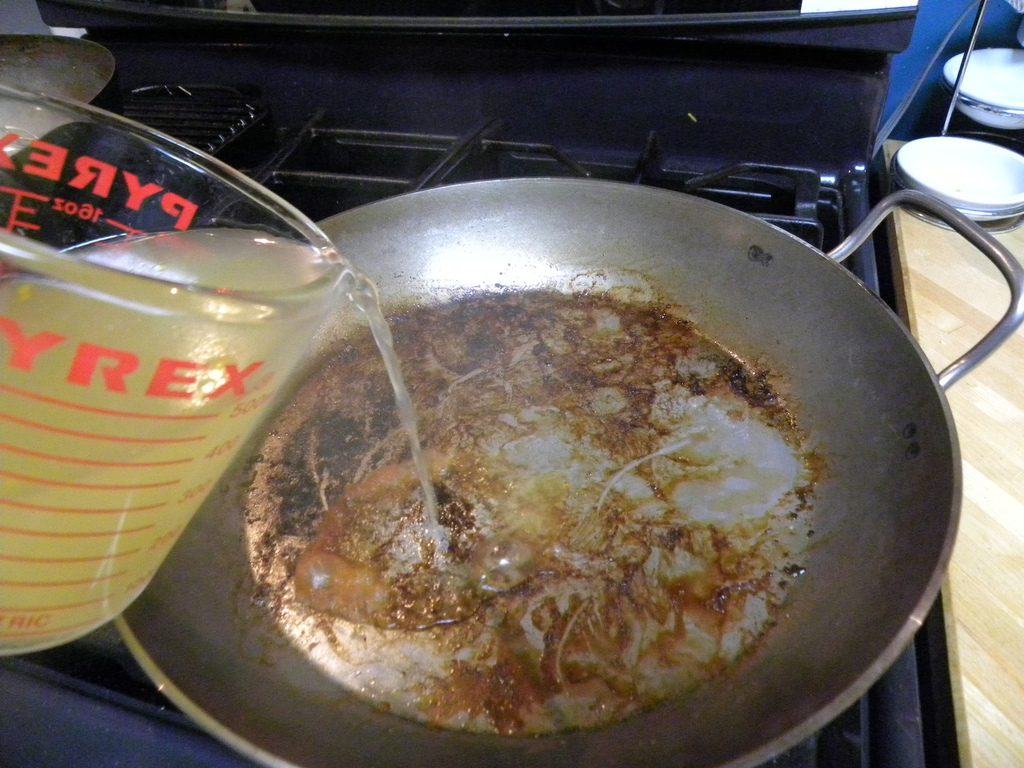
- Add the ½ cup stock or water carefully. Expect steam. Scrape with a wooden spatula as the liquid bubbles, releasing the brown patches.
- Simmer uncovered. Adjust the heat for steady bubbling rather than violent splattering. Aim for about ¼ cup liquid remaining; begin checking after approximately 2 minutes.
- Taste a cooled spoonful. The liquid should taste concentrated but not aggressively salty. Add the initial ½ teaspoon lemon juice or vinegar.
- Move the skillet off the heat. Let vigorous bubbling subside. Whisk in the butter a piece at a time until incorporated.
- Taste again and serve promptly. Add pepper, then salt only if needed.
Cooking shallot in retained fat and finishing with cold butter after taking the pan off the heat follow established pan-sauce methods; the timings above are estimates for this smaller suggested formula. (babi.sh)
Three different processes are happening:
- Deglazing releases browned flavor into the liquid.
- Reduction removes water and concentrates what remains.
- Emulsification disperses butterfat through the watery sauce, adding gloss and body.
Butter finishing is not the same as thickening with flour. Excess heat or prolonged standing can allow the fat to separate, so finish near serving time. (resources.escoffier.edu)

4. Worked example: mushrooms with a lemon-butter pan sauce
Mushrooms let you practice the method without coordinating meat temperatures.
Serves: Two as a topping or small side
Equipment: Preferably a 12-inch stainless-steel skillet
Estimated preparation: 5–10 minutes
Estimated cooking: 10–15 minutes; follow browning and reduction cues
Ingredients
- 1 tablespoon olive oil
- 8 ounces fresh button or cremini mushrooms, cleaned, trimmed and evenly sliced
- 1 tablespoon finely minced shallot, optional
- ½ cup unsalted vegetable stock or water
- ½ teaspoon lemon juice, plus more to taste
- 1 tablespoon cold unsalted butter, cut into pieces
- Black pepper and salt, as needed
- 1 tablespoon chopped parsley, optional
Method
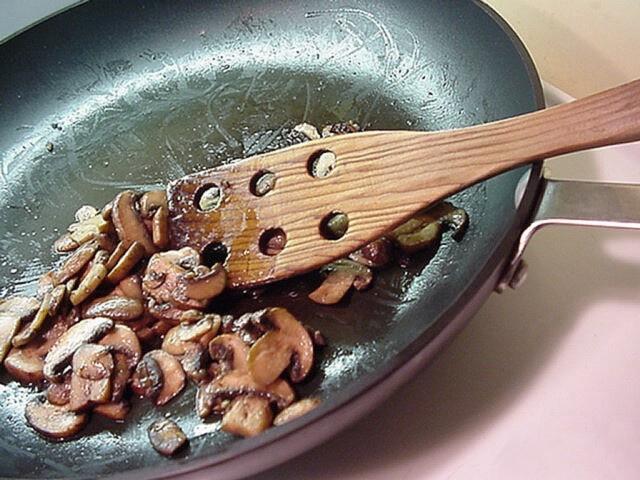
- Heat the oil over medium-high heat. Add the mushrooms in a loose layer; cook in batches if they are piled deeply.
- Cook, stirring occasionally, until tender with browned surfaces. Allow approximately 5–8 minutes, but continue as needed if moisture is pooling.
- Transfer the mushrooms to a clean bowl. Examine the residue and remove excess pooled oil.
- Add the optional shallot over medium heat and stir until softened.
- Add the stock or water. Scrape, then reduce to about ¼ cup.
- Remove from the heat. Stir in the lemon juice, then whisk in the butter.
- Return the mushrooms and toss. Taste before adding salt; finish with pepper and optional parsley.
The mushroom-browning stage draws on USDA and Mushroom Council guidance: use a large pan, avoid crowding and look for tender, golden-brown mushrooms. The separate sauce quantities are the suggested teaching formula in this article. (content.govdelivery.com)
The useful volume check: If you start with ½ cup liquid and reduce to ¼ cup, you have removed roughly half the starting volume before adding butter. For early attempts, pour the reduction into a heatproof measuring cup to check rather than guessing from its depth in a wide skillet.
Suggested serving options include spooning the mushrooms and sauce over toast, rice or mashed potatoes.

5. Choose liquid and acidity separately
Without wine, do not try to replace every tablespoon of wine with vinegar. Use stock or water for the bulk liquid and add acid in small amounts.
- Unsalted stock: A flexible starting point when the fond already contains seasoning.
- Low-sodium broth: Useful, but taste before and during reduction.
- Water: Suitable for releasing fond without adding another stock flavor.
- Vegetable stock: A practical choice for the mushroom example.
Stock contributes flavor and body; water mainly lets the existing pan flavor lead. (guide.michelin.com)
For acidity, start with the measured ½ teaspoon, taste, then add another ¼ teaspoon if desired. Lemon juice or cider vinegar are suggested options; they will not taste identical. The goal is balance, not a noticeably sour sauce. Culinary sauce guidance uses lemon juice or vinegar to offset richness. (resources.escoffier.edu)
For four servings, a reasonable untested scaling suggestion is 1 cup starting liquid and 2 tablespoons butter. Begin with 1 teaspoon acid. Keep the same reduction target—roughly half the starting liquid—but do not assume the cooking time doubles. Use the measured volume and taste as your checks.
6. Fix common problems before adding more ingredients
Use these as practical troubleshooting suggestions, not guaranteed rescues.
| Problem | What to check | What to try |
|---|---|---|
| Bitter or burnt | Black residue or an acrid smell | Discard the scorched base and start again in a clean pan. |
| Too salty | Seasoned fond, salty broth or excessive reduction | Add water 1 tablespoon at a time and taste. Do not reduce it back to the same concentrated state. |
| Too sharp | Too much lemon or vinegar | Add a little water or unsalted stock. Taste with the food before deciding whether more adjustment is needed. |
| Greasy before butter | Excess retained cooking fat | Spoon off visible pooled fat before proceeding. |
| Oily after butter | Sauce was too hot or has separated | Move off heat and try whisking in 1 teaspoon cool water; repeat cautiously if needed. |
| Thin but flavorful | Expectations may be closer to gravy than pan sauce | Serve it as a light spoon-over sauce rather than reducing until salty. |
| Too little sauce | Liquid reduced farther than intended | Add stock or water in small increments and reassess seasoning. |
Burnt fond should be rejected rather than disguised. For oily butter-finished sauces, temperature control matters: overheating can break the emulsion. Dilution and the teaspoon-water rescue above are practical applications of those principles, not promises that every sauce can be recovered. (guide.michelin.com)
7. Keep meat safety separate from sauce appearance
A glossy sauce is a quality cue, not proof that meat is safely cooked. If using this method after cooking meat, check it with a food thermometer before removing it from the skillet:
- Chicken and other poultry: 165°F.
- Beef, pork, veal and lamb steaks, chops and roasts: 145°F, followed by a three-minute rest.
- Ground beef or pork: 160°F. (foodsafety.gov)
Use a clean plate and utensils for cooked food. Do not use a plate that held raw meat without washing it. Raw marinade should not simply be poured into a finished sauce; FDA guidance requires bringing reused marinade to a boil first. (fda.gov)
Refrigerate leftovers in a covered shallow container within two hours, or within one hour when temperatures exceed 90°F. Keep refrigerated leftovers for three to four days. When reheating, USDA advises bringing sauces to a rolling boil and reheating leftovers to 165°F. (fsis.usda.gov)
That reheating may sacrifice the original butter emulsion. Follow the safety guidance rather than keeping the sauce merely warm to preserve its appearance. For a small pan sauce, the simplest plan is to finish only what you expect to serve.