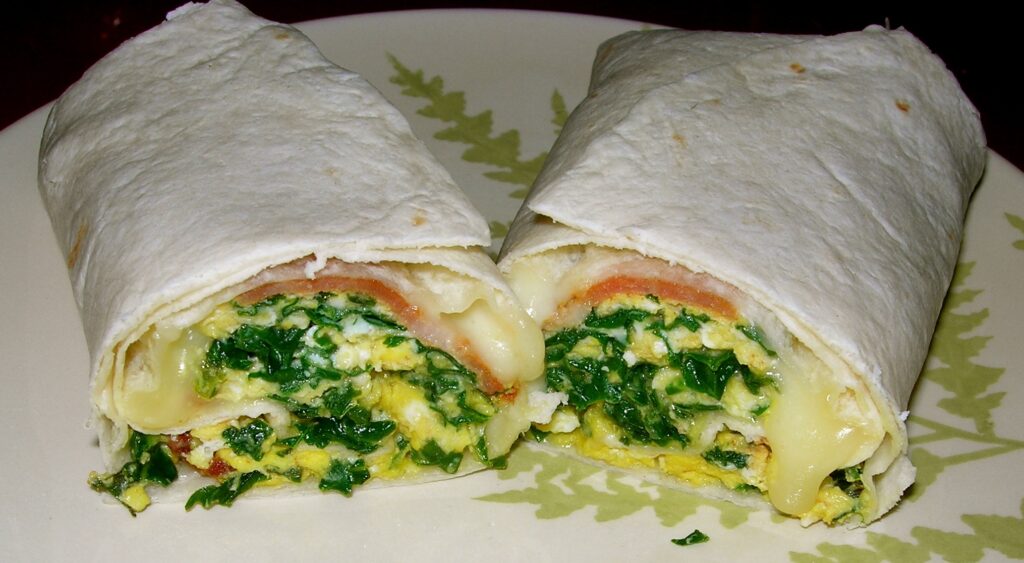
Quick answer
For breakfast burritos that reheat well, use drained fillings, cool them promptly before assembly, and keep portions consistent. Freeze individually wrapped burritos, then reheat until the filling reaches 165°F, checking more than one spot. Cooling before rolling helps limit sogginess; a thermometer—not a browned tortilla—checks safety. (chhs.colostate.edu)
1. Plan a six-burrito batch with measured cooked fillings
Start with 10-inch flour tortillas and a modest amount of filling rather than trying to make each burrito as large as possible. Featherstone Nutrition’s published assembly guide uses ⅓ cup scrambled eggs, ¼ cup potatoes, 2 tablespoons black beans and 1 tablespoon cheese per burrito, and notes that 10-inch tortillas are easier to wrap than smaller ones. (featherstonenutrition.com)
The following plan uses those portions, with salsa reserved for serving.
| Ingredient | Per burrito | For six burritos |
|---|---|---|
| Flour tortilla, 10-inch | 1 | 6 |
| Fully cooked scrambled eggs | ⅓ cup | 2 cups |
| Cooked breakfast potatoes | ¼ cup | 1½ cups |
| Cooked black beans, well drained | 2 tablespoons | ¾ cup |
| Shredded cheddar | 1 tablespoon | 6 tablespoons |
Yield: Six burritos.
Serving size: One burrito; add fruit or another side according to appetite.
These batch totals are arithmetic based on the published per-burrito portions, not a measured raw-to-cooked yield. This is an assembly guide, not a recipe personally kitchen-tested by Prime Food Recipes. (featherstonenutrition.com)
Gather a skillet, spatula, measuring cups and spoons, shallow food-storage containers, individual wrapping, freezer bags and an instant-read food thermometer.
Cooking and cooling time will depend on your starting ingredients. Measure the filling after cooking; raw potatoes and uncooked eggs are not interchangeable with the cooked volumes above.
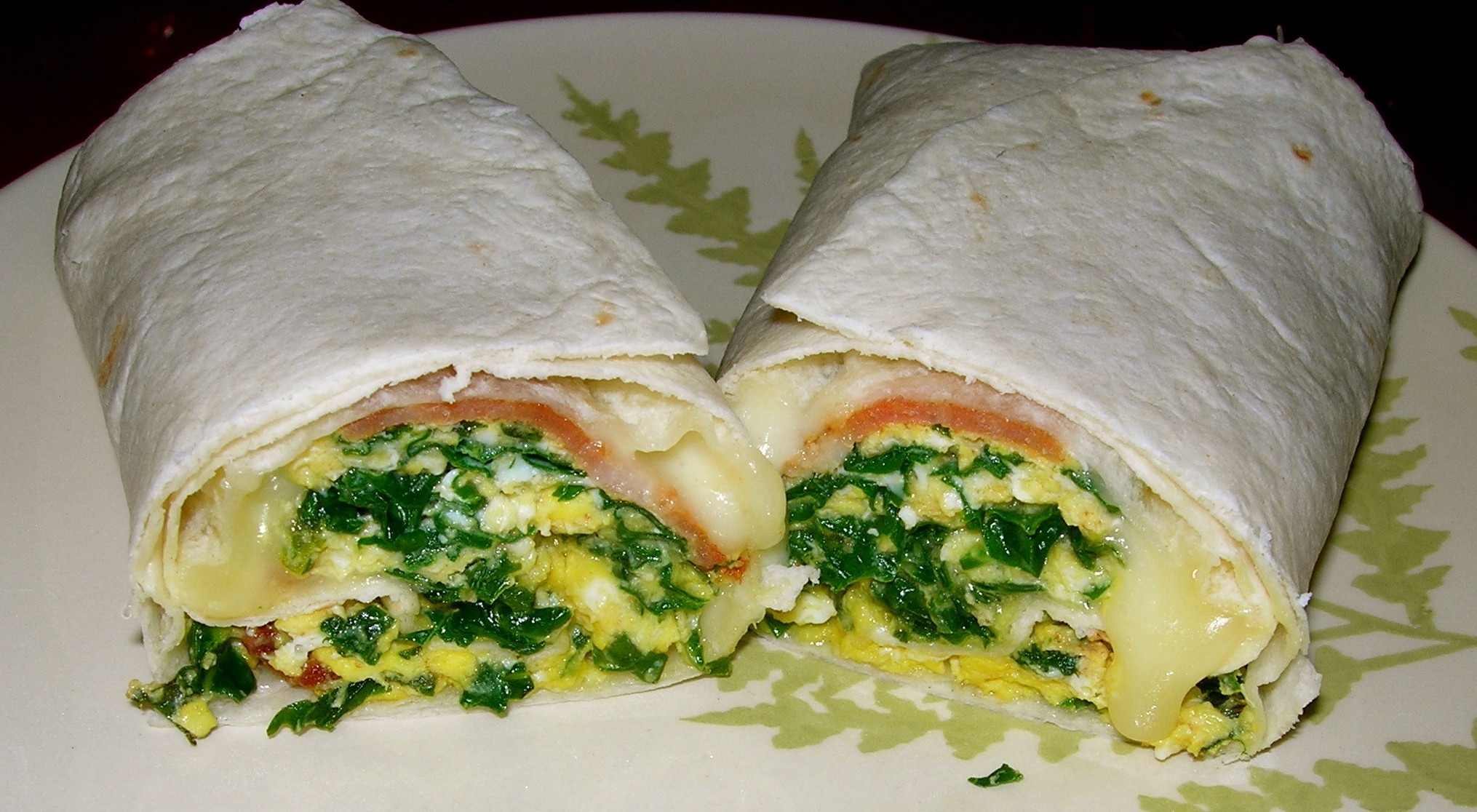

2. Prepare filling that is cooked through, not swimming in moisture
Keep the eggs, potatoes and beans separate until portioning. That makes it easier to spot a wet ingredient and correct it before it reaches the tortilla.
For the potatoes: Cook breakfast potatoes until tender inside and golden outside. The National Park Service’s freezer-burrito method cooks potatoes before combining them with eggs. If using packaged frozen potatoes, follow their cooking instructions rather than treating thawing as cooking. (home.nps.gov)
For the eggs: Cook them fully, but do not deliberately dry them out for freezing. FDA guidance specifies 160°F for egg dishes. Use a clean thermometer to check the cooked egg mixture; do not leave it undercooked in anticipation of reheating later. (fda.gov)
For the beans: Drain thoroughly and blot away remaining surface moisture. Colorado State University specifically recommends well-drained, patted-dry beans for breakfast burritos. It also recommends keeping salsa outside the frozen burrito because the extra liquid can contribute to sogginess. (chhs.colostate.edu)
Adding vegetables? Sauté or roast them separately, then inspect the pan before mixing. If liquid collects around the vegetables, continue cooking it off. For spinach, squeeze out excess liquid after cooking and cooling. These are practical moisture-control steps, not substitutes for safe cooking or cooling. (chhs.colostate.edu)
For a first batch, consider leaving watery additions out entirely. Establish how the basic egg, potato and bean combination wraps and reheats before adding more variables.
3. Cool promptly in shallow containers—not on the counter
“Cool before assembling” does not mean leaving a skillet of eggs out until completely cold.
Transfer cooked fillings into shallow containers and refrigerate promptly. USDA guidance allows hot food to go directly into the refrigerator; dividing it into smaller portions helps it cool faster. Do not leave a large, deep mass of filling to cool slowly. (fsis.usda.gov)
Keep these safety limits separate from texture decisions:
- Refrigerator: 40°F or below.
- Freezer: 0°F or below.
- Time outside refrigeration: No more than two hours, or one hour when the surrounding temperature is above 90°F. Refrigerate promptly rather than using those limits as waiting periods. (foodsafety.gov)
Once the fillings are chilled, set out only what you need for assembly. Return the finished burritos to cold storage promptly.
Use clean containers and utensils for cooked fillings. Do not reuse the bowl that held raw eggs unless it has been washed thoroughly. Wash your hands after handling uncooked eggs and before touching tortillas or cooked food. (fda.gov)
If you cook one evening and assemble the next morning, keep everything refrigerated overnight. Assembly does not restart the storage clock: refrigerated leftovers should be used within three to four days of cooking. (extension.illinois.edu)
4. Warm the tortilla, portion the filling and roll without forcing it
Warm each tortilla just enough to make it flexible. The Department of Veterans Affairs’ breakfast-burrito recipe warms 10-inch tortillas in the microwave for 15–30 seconds before filling. Follow package directions where provided. (nutrition.va.gov)
Work through one burrito before laying out the whole batch:
- Put a warmed tortilla on a clean work surface.
- Arrange the measured fillings in a short line across the middle, leaving room at both ends.
- Fold the left and right sides inward.
- Bring the bottom edge over the filling, tuck it gently underneath, and roll forward.
- Set the burrito seam-side down. (featherstonenutrition.com)
Check the first roll: Can you close both ends without pulling hard? Does filling escape when you finish rolling? If it is difficult to close, remove some filling rather than stretching the tortilla around it.
Use that first burrito as your portioning reference. Consistency is more useful than squeezing every last spoonful into the final tortilla.
For the six-burrito example, measure out all six portions before wrapping. If a tortilla is unusually stiff or small, make that burrito lighter and refrigerate any excess filling separately.
5. Wrap individually, label clearly and freeze
For individual freezer portions, let the assembled burritos remain cold, wrap each in food-safe plastic wrap, and place them in a freezer bag. This follows the VA’s published freezer-burrito packaging method. Press excess air from the bag before sealing. (nutrition.va.gov)
Label the bag with:
- The filling: “egg, potato, black bean, cheddar.”
- The cooking date.
- The freezing date, if different.
- A reminder to remove wrapping and reheat to 165°F.
Illinois Extension recommends labeling leftovers with their name and date. Recording both dates is a practical way to avoid confusing older refrigerated filling with a freshly cooked batch. (extension.illinois.edu)
Use three months as a freezer-quality target, consistent with the VA’s burrito recipe. USDA explains that continuously frozen leftovers remain safe indefinitely, but moisture and flavor can deteriorate during extended storage. That does not make freezing a remedy for food left out too long before storage. (nutrition.va.gov)
If you want breakfast tomorrow, keep that portion refrigerated and freeze the rest. There is no need to freeze a burrito simply to thaw it again immediately.
6. Reheat the center first, then crisp the outside
You can reheat frozen leftovers without thawing first. Alternatively, thaw a burrito in the refrigerator—not on the counter—before reheating. Frozen portions take longer, and appliance power and burrito thickness affect the time. (fsis.usda.gov)
Microwave: useful for one burrito
Remove the storage wrapping and place the burrito on a microwave-safe plate. Cover with a microwave-safe, vented cover. Heat in stages, turning and rotating the burrito between stages. Allow standing time, then check the filling in several places with a thermometer. Continue heating if any checked area is below 165°F. (fsis.usda.gov)
Insert the probe into the thick central filling rather than testing only the folded tortilla ends. Do not accept a hot outer edge as evidence that the middle is ready.
Oven: an option when you have more time
Colorado State University’s method uses a 350°F oven, with foil-wrapped burritos placed on a baking sheet. Remove plastic storage wrapping before adding oven-safe foil. Check that the filling reaches 165°F; do not rely on a fixed baking time, especially when starting from frozen. (chhs.colostate.edu)
Skillet finish: for texture after reheating
Once the center has reached the safe reheating temperature, unwrap the burrito and crisp it briefly in a skillet. Featherstone Nutrition recommends a microwave-then-skillet approach for a crisper exterior. Treat this as a finishing step, not proof that a frozen center has heated through. (featherstonenutrition.com)
Serve salsa, sour cream or avocado alongside the finished burrito rather than adding them to every freezer portion.
7. Troubleshoot the first burrito before changing the whole batch
Use the first reheated portion as a practical check, and change one thing at a time.
The tortilla is wet.
For the next batch, focus on draining beans and cooling fillings before rolling. Keep salsa separate. Those changes address moisture entering the wrap rather than trying to solve everything with longer reheating. (chhs.colostate.edu)
The eggs are tough.
Check the initial cooking stage. Aim for fully cooked eggs, not browned, dried-out curds. On reheating, use temperature checks to identify when the burrito is ready instead of continuing indefinitely. (fda.gov)
The middle is cold while the ends are hot.
Turn and rotate during microwaving, allow standing time, and check several locations. Keep heating until every checked location reaches 165°F. (fsis.usda.gov)
The wrap tears or will not close.
Warm the tortilla before rolling and reduce the filling. Try the next burrito with the original measured portions rather than adding extra potatoes or beans. (nutrition.va.gov)
For your first batch, write down the tortilla used, whether the burrito started frozen or refrigerator-thawed, and the heating sequence that reached 165°F. That record gives you a useful starting point next time—not a replacement for checking the temperature.