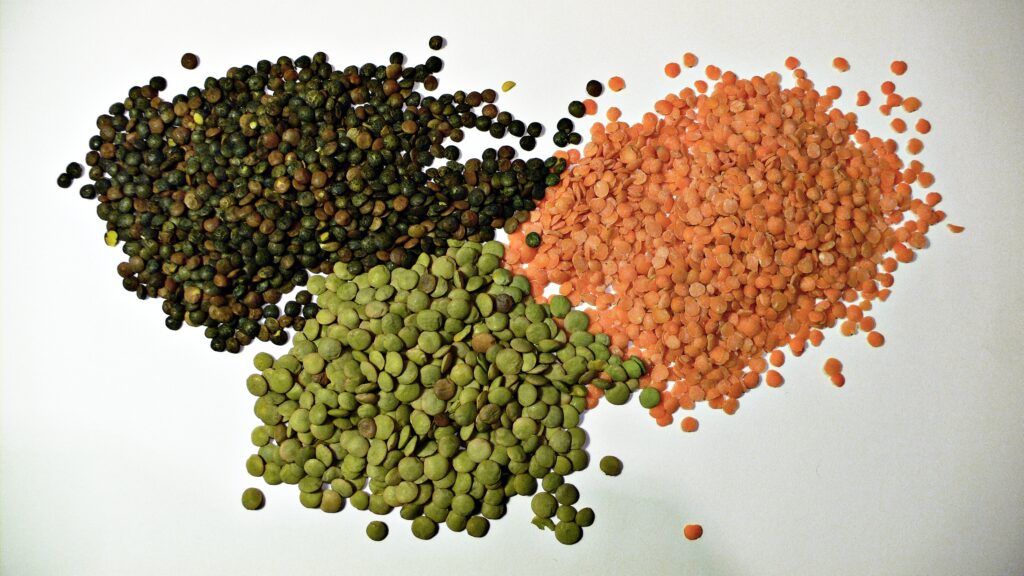
Quick answer: For four servings, start with 1 cup of dried brown or ordinary green lentils, onion, 2 cups of chopped carrots and celery, and 5 cups of water or broth. Simmer gently until the lentils are tender, then add canned tomatoes. Brown and green lentils suit a chunky soup; split red lentils produce a softer, thicker result. Add acidic ingredients after the lentils soften. (foodhero.org)
Recipe status: This is an original, source-informed recipe framework, not a personally kitchen-tested recipe. Times and finished yield are estimates; use the tenderness checks below.
1. Choose lentils for the texture you want
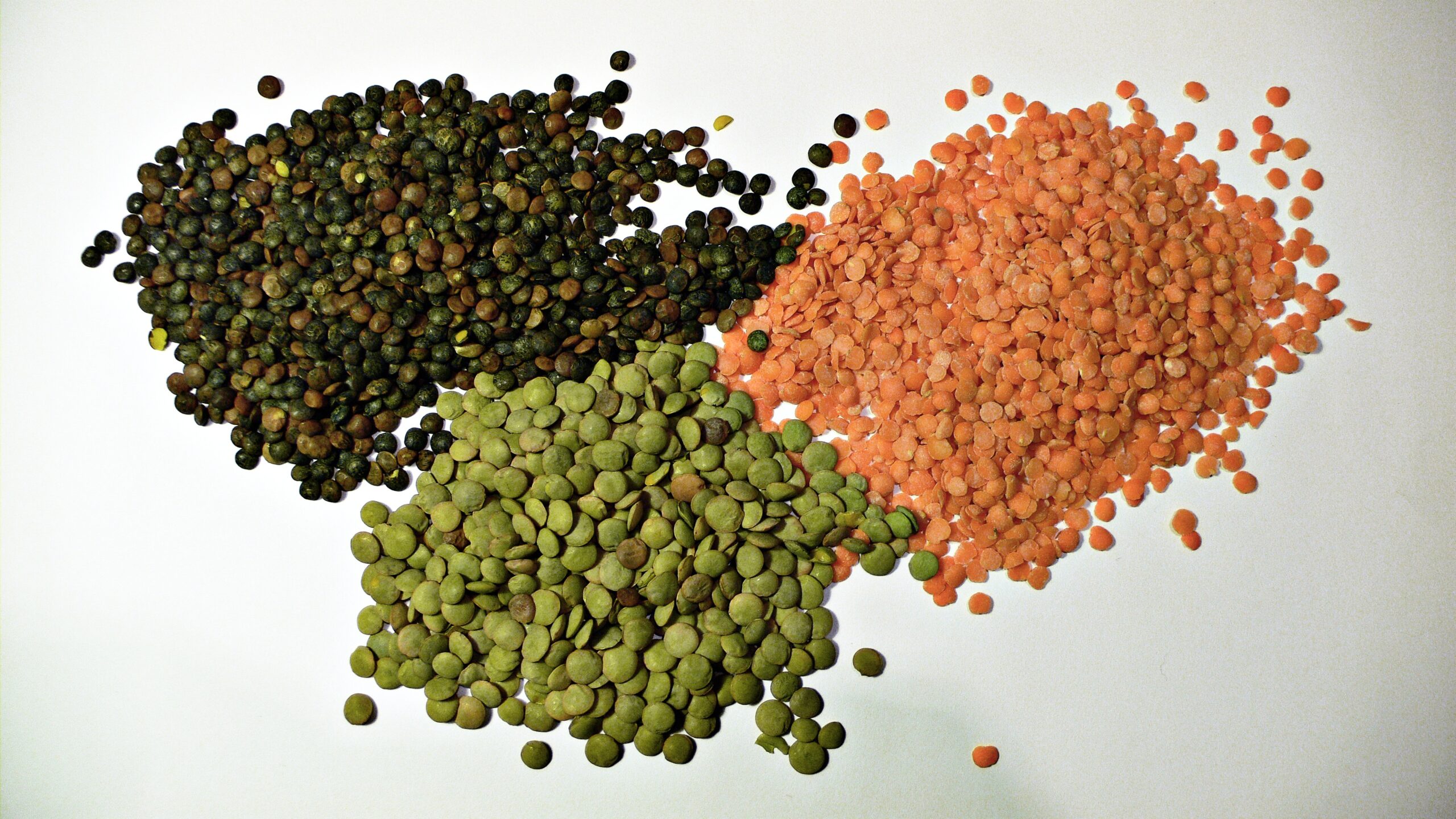
Brown lentils are the starting choice for this recipe. They hold their shape with gentle cooking but soften and break apart with prolonged cooking or a rapid boil. Ordinary green lentils also work for a chunky soup. Neither needs soaking. (foodhero.org)
Check the bag rather than relying on color alone:
| Lentil type | What to expect | How to use it here |
|---|---|---|
| Brown | Distinct lentils that soften with continued cooking | Use in the main recipe |
| Ordinary green | Lentils that retain their shape | Use in the main recipe; follow the package’s timing |
| French green or Puy | Firmer texture and somewhat longer cooking | Allow extra time and check tenderness |
| Split red | Faster cooking; softens into a thick consistency | Use the separate adjustment in section 5 |
These differences matter more than matching the soup’s color to a photograph. Split red lentils are not a direct substitute when you want intact lentils throughout the bowl. (foodhero.org)
Whatever you choose, sort through the dry lentils for foreign material, then rinse them in a fine-mesh strainer. Lentils can go straight into the pot without an overnight soak. (pulses.org)

2. Gather ingredients for four servings
Planned yield: Four main-dish servings, approximately 1½–2 cups each; evaporation and substitutions will change the final volume. Divide the finished pot evenly for four portions.
Estimated time: 15 minutes preparation; 35–50 minutes cooking, with additional time if the lentils need it.
Equipment: A heavy-bottomed 4- to 5-quart pot with a lid, cutting board, knife, strainer, measuring cups and spoons, and a stirring spoon.
Ingredients, in order of use
- 1 tablespoon olive oil or another cooking oil
- 1 cup chopped onion, cut into approximately ¼-inch pieces
- 1 cup chopped carrots, cut into approximately ¼-inch pieces
- 1 cup chopped celery, cut into approximately ¼-inch pieces
- 2 garlic cloves, minced
- 1 teaspoon ground cumin
- ½ teaspoon dried thyme or oregano
- 1 cup dried brown or ordinary green lentils, sorted and rinsed
- 5 cups water or low-sodium vegetable broth, plus extra as needed
- 1 can diced tomatoes, 14.5 ounces, with its juice
- ¼ teaspoon ground black pepper
- Fine salt, to taste; begin with ¼ teaspoon after cooking if using water
- Optional: lemon juice or vinegar, added 1 teaspoon at a time at the end
Use cups as the controlling measurement for the chopped vegetables: individual onions, carrots, and celery stalks vary in size.
The base recipe calls for water or vegetable broth, so there is no need to buy broth specifically for this meal. If using bouillon, follow its package dilution instructions and wait until the end to decide how much salt to add.
3. Cook in this order: vegetables, lentils, then tomatoes
-
Soften the vegetables. Put the pot over medium heat and add the oil. Add the onion, carrots, and celery. Cook for approximately 8–10 minutes, stirring regularly, until the onion is translucent and the vegetables begin to soften. Lower the heat if the onion starts to scorch.
-
Add garlic and seasonings. Stir in the garlic, cumin, and thyme or oregano. Cook for about 30 seconds, stirring, then proceed before the garlic browns.
-
Add lentils and liquid. Stir in the rinsed lentils and 5 cups of water or broth. Scrape the bottom to release any stuck vegetables. Bring to a boil over medium-high heat.
-
Reduce to a gentle simmer. Lower the heat and partly cover the pot. Look for small, steady bubbles rather than vigorous movement across the whole surface. Stir occasionally, including across the bottom. Gentle simmering helps limit splitting and breaking. (pulses.org)
-
Check tenderness, not just the clock. Begin checking at 20 minutes, or at the package’s earliest suggested time. Continue in 5-minute intervals as needed. Cool a spoonful before tasting: the lentils should crush easily in your mouth without a hard, raw-tasting center. Keep them submerged by adding water in ½-cup increments if necessary. Package timing is a starting point, not a guarantee. (pulses.org)
-
Add tomatoes once the lentils are tender. Stir in the tomatoes with their juice and the black pepper. Return to a simmer and cook for approximately 8–10 minutes, until the tomatoes are heated through and the vegetables are tender.
-
Finish deliberately. Adjust the thickness using section 6. Taste, add salt gradually, and taste again. If desired, add lemon juice or vinegar 1 teaspoon at a time.
Why hold the tomatoes? Acidic ingredients such as tomatoes and vinegar can slow the softening of pulses. Adding them after the lentils are tender makes the cooking sequence easier to control. (pulses.org)
4. Substitute vegetables without buying a special assortment
Treat the following as suggested variations, not separately tested recipes. For a first attempt, replace vegetables rather than adding several extra cups to the pot.
No celery? Use carrots. Replace the 1 cup of celery with 1 additional cup of carrots, keeping the pieces about ¼ inch. Add them with the onion. The seasoning will differ, but the recipe does not depend on celery.
Other suggested swaps:
- Chopped cabbage: Substitute for some of the celery and add it with the early vegetables.
- Potato: Replace up to 1 cup of the carrots or celery with peeled, ½-inch potato cubes. Add with the lentils and check the potato separately for tenderness before serving.
- Zucchini: Replace some of the early vegetables, but hold the zucchini until the tomatoes go in. Cut it into ½-inch pieces.
- Frozen peas or chopped spinach: Add near the end and follow any cooking instructions on the package. These are optional additions rather than replacements for all the early vegetables.
Worked example: carrots, onion, and frozen spinach
Suppose you have onion and carrots but no celery:
- Measure 1 cup chopped onion and 2 cups chopped carrots.
- Follow the main method, keeping the original lentil and liquid quantities.
- Add 1 cup frozen chopped spinach after the tomatoes, breaking up any clumps.
- Follow the spinach package’s cooking directions.
- Check the lentils, carrots, and spinach before adjusting salt and liquid.
This example shows how to use what is available without changing every variable at once. It is a proposed variation, not a report of a tested result.
5. Adjust the method if you only have split red lentils
Split red lentils cook faster because their seed coats have been removed and the lentils have been split. They are useful when you want a softer soup rather than separate, intact lentils. (lentils.org)
For a suggested red-lentil version:
- Use the same 1 cup dry measure.
- Chop carrots and celery finely and soften them thoroughly before adding lentils.
- Start checking the lentils after about 5–7 minutes of simmering, while also consulting the package.
- Add tomatoes once the lentils are tender.
- Continue until the vegetables are tender, stirring and checking the bottom regularly. (lentils.org)
Do not automatically give red lentils the longer simmer planned for whole lentils. Expect them to lose definition and contribute to a thicker soup; that is a different result, not necessarily a failed one. (foodhero.org)
6. Fix thickness and avoid common mistakes
Make final adjustments only after the lentils and vegetables are tender. These are practical finishing suggestions for this recipe framework.
Too thick: Stir in hot water or broth, ¼ cup at a time. Bring back to a simmer, then taste before adding more seasoning.
Too thin: Simmer uncovered for a few minutes, stirring and checking frequently. Alternatively, mash some of the cooked lentils against the side of the pot and stir them back through.
Flat-tasting: Check salt first. Then try the optional lemon juice or vinegar in small increments. Additions should solve a specific problem, not happen automatically.
Common mistakes to watch for:
- Adding tomatoes at the start: Hold them until the lentils soften; acidity can delay cooking. (pulses.org)
- Using a rolling boil throughout: Reduce the heat after the initial boil to help preserve texture. (pulses.org)
- Stopping at a fixed minute: Lentil type, age, water hardness, and altitude can affect cooking time. Taste for tenderness. (pulses.org)
- Overloading the pot with substitutions: For the first batch, keep the basic vegetable quantity and change one or two ingredients.
- Buying ingredients solely to “save money”: Compare what you already have with what the recipe actually needs.
No dollar-per-serving estimate is claimed here because no dated, location-specific grocery basket has been verified. To calculate your own, total the cost of the portions used—including oil and seasonings—and divide by four.
7. Cool, store, and reheat safely
Tenderness is a cooking-quality check; safe leftover handling is a separate task.
Transfer leftover soup into shallow containers rather than cooling the whole pot on the counter. Nebraska Extension recommends a soup depth of no more than 2 inches and prompt refrigeration. Warm soup can go into the refrigerator in shallow, loosely covered containers; cover fully when cooled. Use refrigerated soup within 3–4 days, or freeze it. (food.unl.edu)
Refrigerate perishables within 2 hours, or 1 hour when exposed to temperatures above 90°F. Keep the refrigerator at 40°F or below. Label portions with the cooking date so the storage limit is easy to track. (foodsafety.gov)
For reheating, add a little water if needed and stir as the soup heats. Bring soup to a rolling boil and verify that reheated leftovers reach 165°F with a food thermometer. In the microwave, use a microwave-safe covered, vented container, stir for even heating, and check several spots for cold areas. (fsis.usda.gov)